
“What size skip do I need?” is one of the most common questions people ask before starting a renovation, clear-out or building project. Choose too small and you pay for a second skip. Choose too large and you pay for space you never use, or end up with a container that is too heavy to collect.
This guide explains the standard skip sizes, what each one is best for, and the rules worth checking before you book.
Why Skips Matter So Much in the UK
Skips are one of the main ways construction and renovation waste leaves a site in the UK. Construction, demolition and excavation is by far the largest source of waste in England, accounting for 66% of the 178.1 million tonnes of total waste generated in 2024. In the same year, England produced 63.3 million tonnes of non-hazardous construction and demolition waste, and 60.3 million tonnes of it, around 95%, was recovered.
That high recovery rate depends heavily on how waste is collected. Clean, well-sorted loads in the right size of skip are far easier to recycle than mixed loads squeezed into whatever container happens to be available.
Standard Skip Sizes Explained
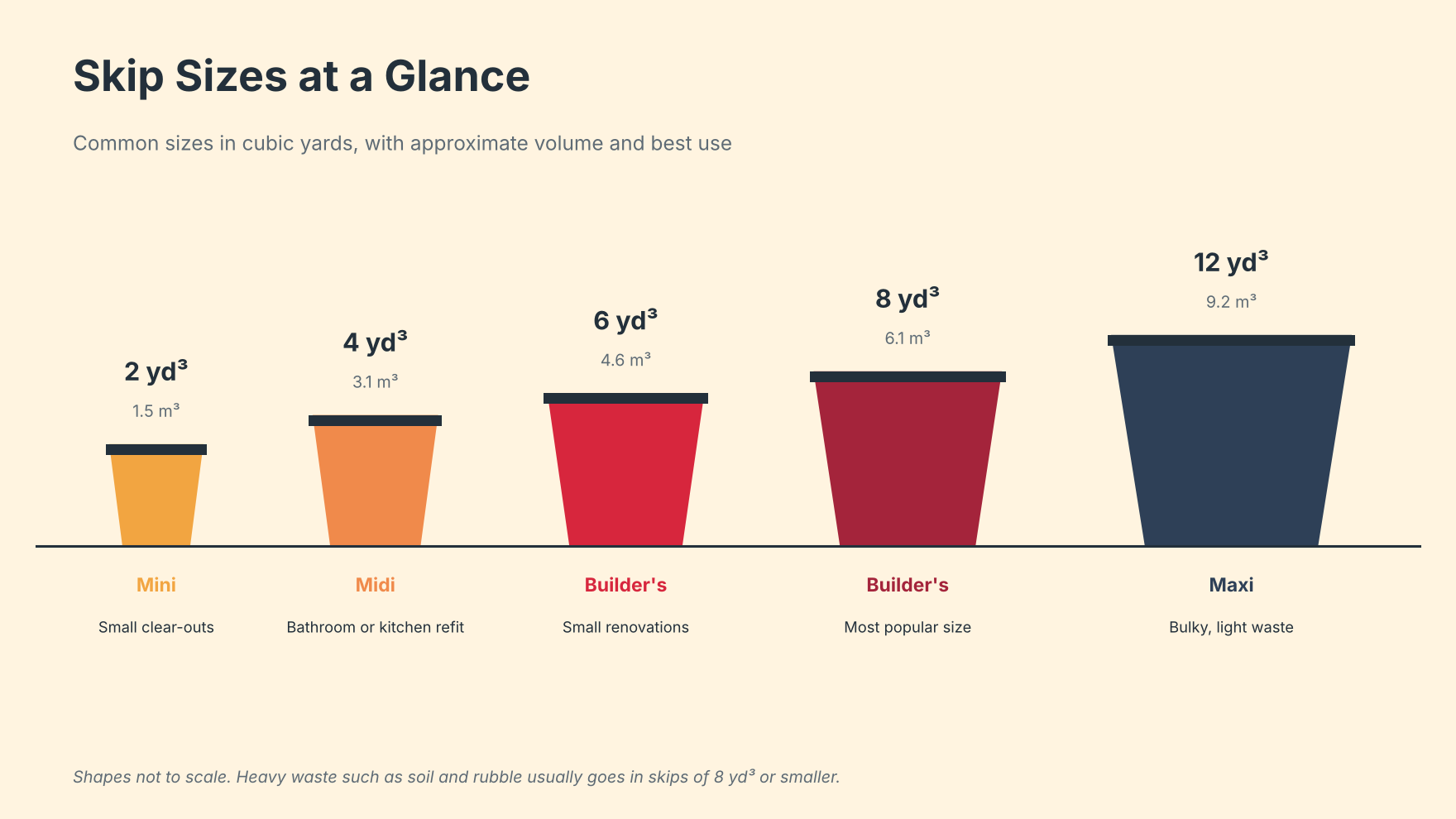
In the UK and Ireland, skips are measured in cubic yards. In Australia, the equivalent skip bins are usually sold in cubic metres. The most common sizes are:
| Skip size | Approx. volume | Common name | Best for |
|---|---|---|---|
| 2 yd³ | 1.5 m³ | Mini skip | Garden waste, small clear-outs |
| 4 yd³ | 3.1 m³ | Midi skip | Bathroom or kitchen refits |
| 6 yd³ | 4.6 m³ | Builder’s skip | Small renovations, rubble |
| 8 yd³ | 6.1 m³ | Builder’s skip | Larger renovations, house clearances |
| 12 yd³ | 9.2 m³ | Maxi skip | Bulky, light waste such as furniture and packaging |
Larger roll-on roll-off containers, typically 20 to 40 yd³, are used on commercial sites and are loaded by a different type of truck.
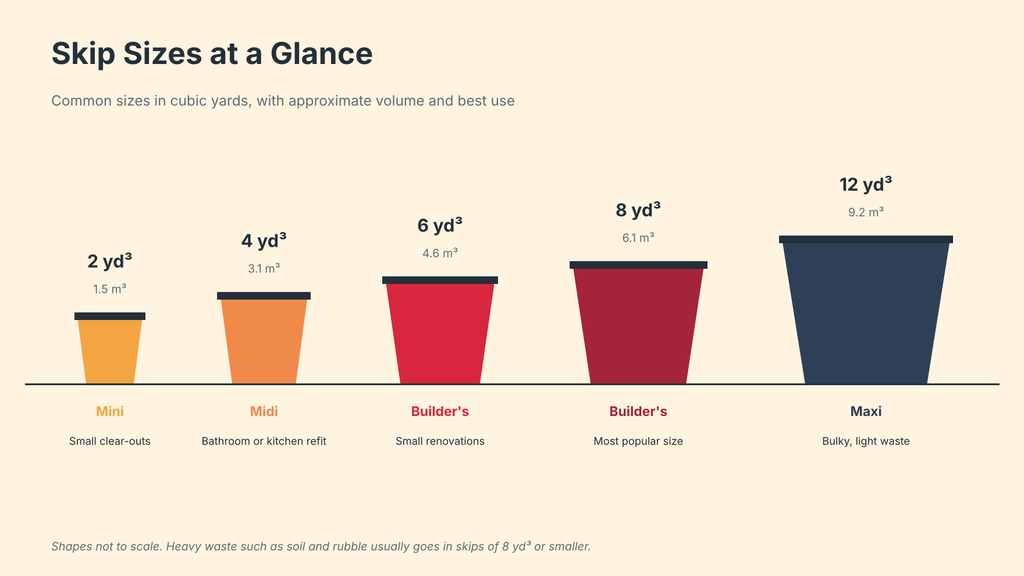
Common skip sizes compared, from 2 yd³ mini skips to 12 yd³ maxi skips.
How to Choose the Right Size
Start with the type of waste, not just the volume. Heavy materials such as soil, concrete, brick and rubble fill a skip’s weight allowance long before they fill its space. For this reason, heavy waste is usually limited to skips of 8 yd³ or smaller, and many operators will not accept it in maxi skips at all.
Estimate generously. Most people underestimate how much waste a project creates. Bulky items such as old furniture, kitchen units and doors take up far more room than expected, especially when they cannot be broken down. If you are between two sizes, the larger one is often cheaper than booking a second skip.
Think about access and space. A skip needs a firm, level spot and enough clearance for the lorry to lower and lift it. Narrow driveways, overhead cables and low branches can all limit which size can be delivered.
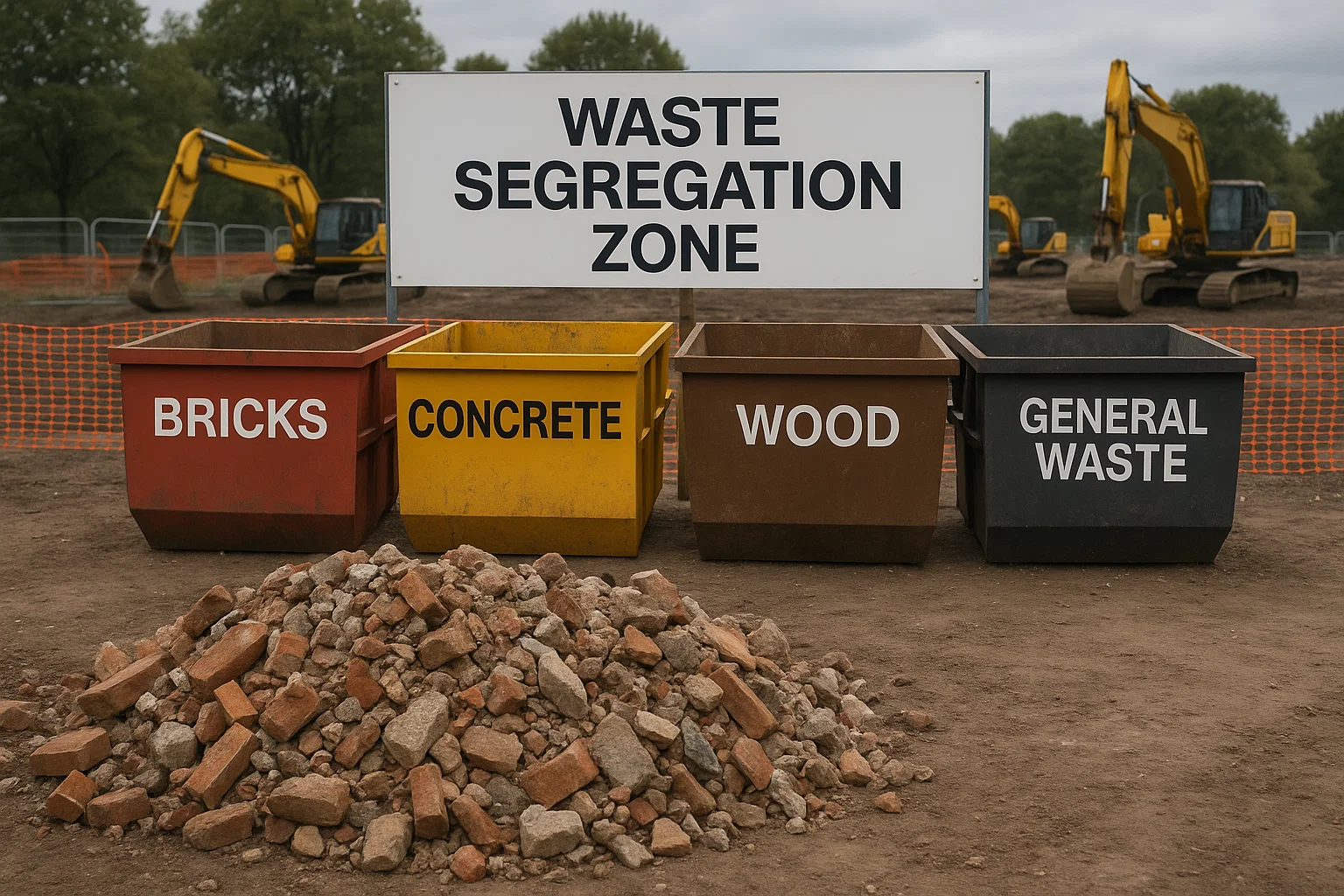
Consider separating materials. On larger projects, two smaller skips, for example one for rubble and one for general waste, can be more practical than one large mixed skip. Separated loads are easier to recycle and are often cheaper to process.
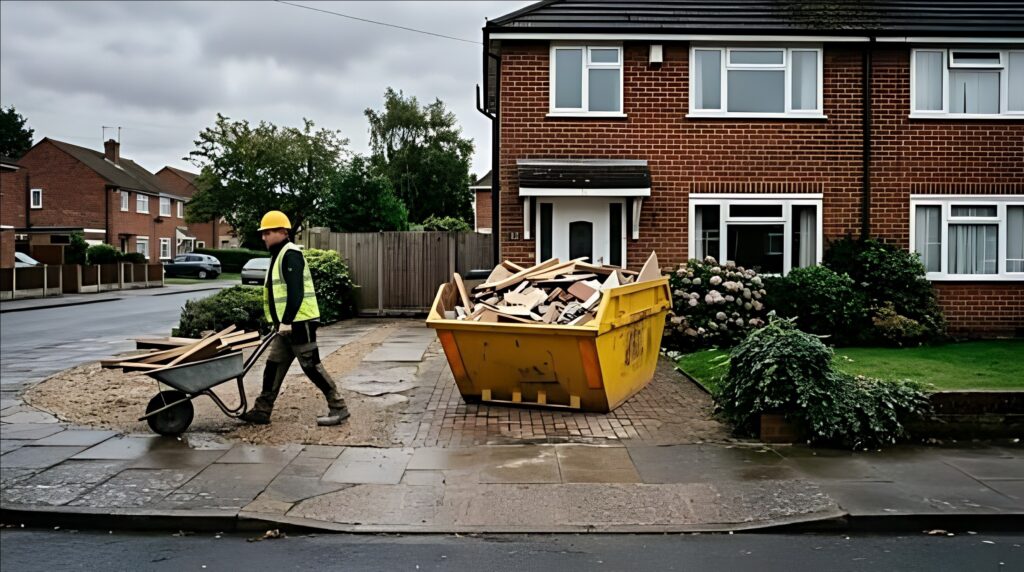
The 8 yd³ builder’s skip is one of the most widely used sizes for home renovations.
Rules to Check Before You Book
Permits for public roads. In the UK, placing a skip on a public road or pavement usually requires a permit from the local council. The skip must also be clearly marked and, where required, lit at night. Placing a skip on your own driveway or private land generally does not need a permit.
Do not overfill. Skips must be loaded no higher than the top of the sides so they can be transported safely. An overfilled skip may be refused for collection until the excess is removed.
Know what cannot go in. Items such as asbestos, batteries, gas bottles, tyres, paint, fridges and electrical equipment are usually not accepted in a general skip, because they need specialist handling.
What Makes a Good Skip
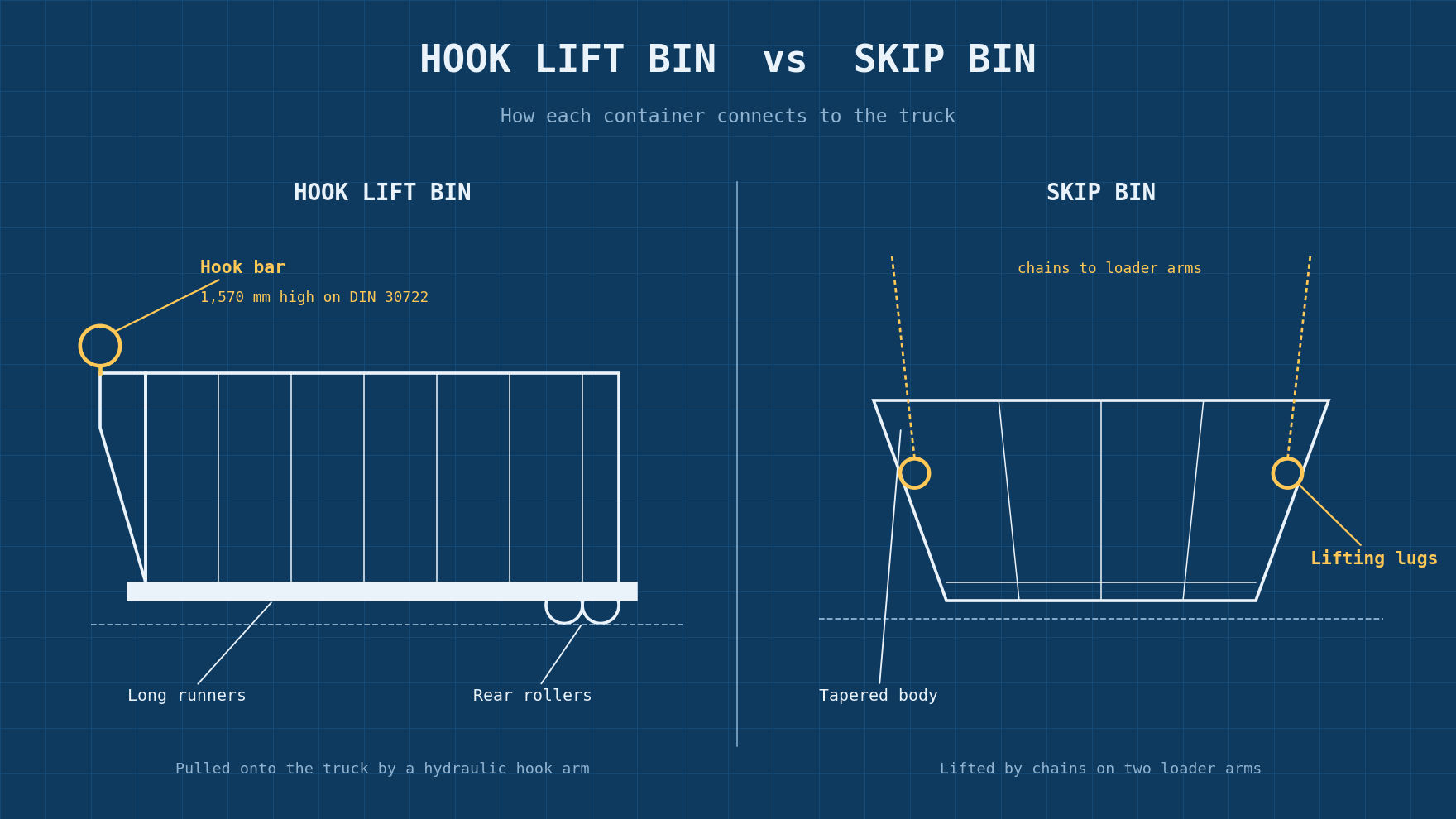
For skip operators, the right sizes are only half the picture. Skips are lifted, dropped, filled with heavy rubble and left outdoors in all weather, so build quality directly affects how long they last. The key points to look for are a reinforced floor, strong lifting lugs, well-welded seams, and a coating system with primer and top coat to resist rust. Optional drop doors, which let users walk barrows straight in, and lockable lids for secure sites are also popular.
Looking for durable skips in standard or custom sizes? Contact the Zonnix team to discuss skip bin solutions built to your specifications.