
In the United States, the largest flow of solid waste does not come from household trash cans. It comes from job sites. Construction, renovation and demolition of buildings, roads and bridges generate a volume of debris that far exceeds everyday municipal waste, and almost all of it leaves the site in a steel container.
The Scale of C&D Debris in the US
The most recent national estimate puts US construction and demolition (C&D) debris at 600 million tons in 2018. To put that in context, total municipal solid waste generated in the same year was 292.4 million tons, or 4.9 pounds per person per day. C&D debris was roughly twice that amount.
Debris volumes have also grown. Between 2015 and 2018 alone, C&D generation rose from about 547 million tons to 600 million tons, an increase of nearly 10% in three years.
One figure stands out more than any other: demolition accounts for more than 90% of all C&D debris generated, while new construction accounts for less than 10%. That means the biggest driver of debris volume is not how much gets built, but how much gets torn down, renovated or replaced. Aging buildings, road resurfacing and bridge rehabilitation all contribute.
Where the Debris Goes
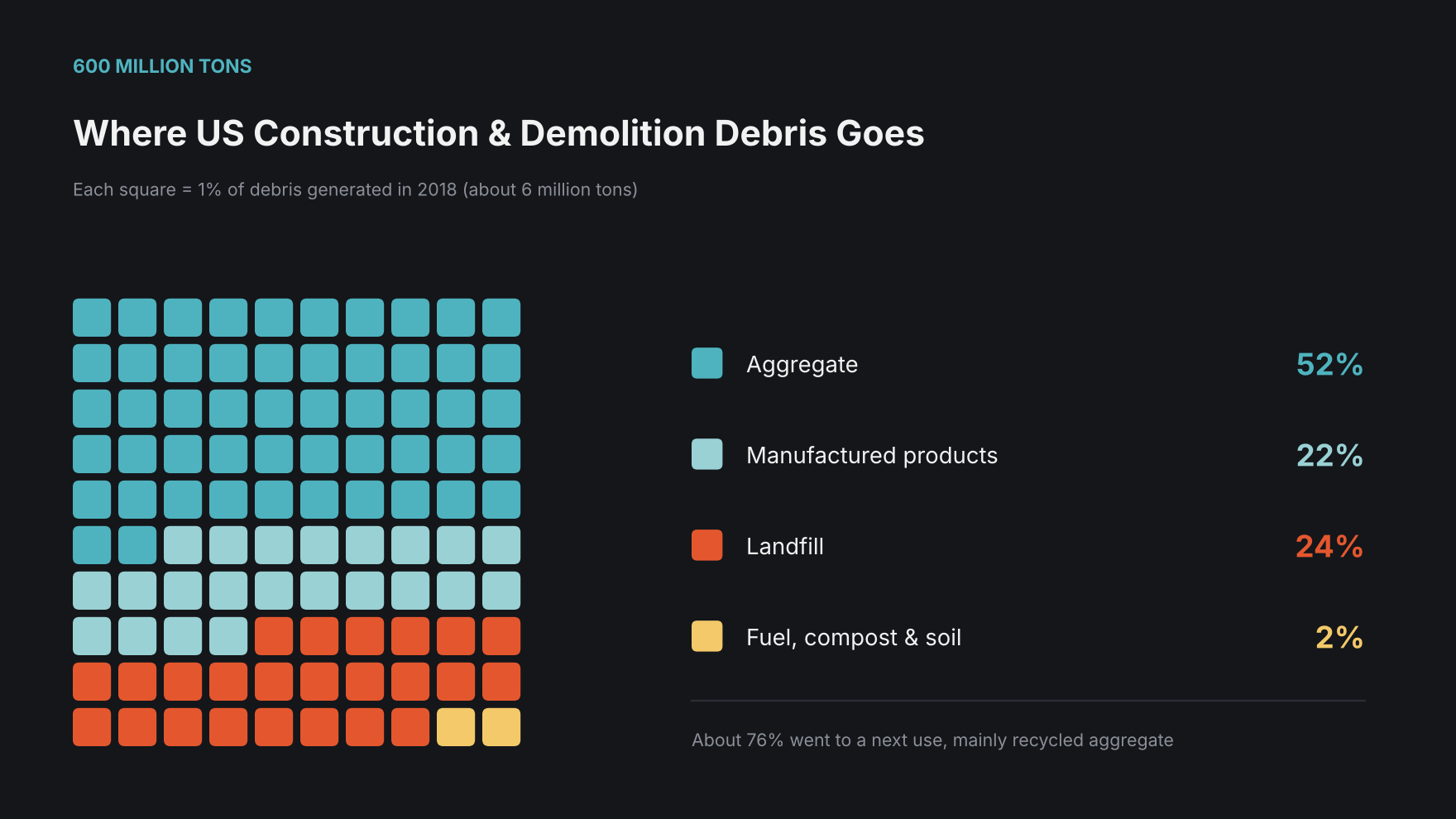
Most of that debris does not end up in landfill. Just over 455 million tons, about 76% of the total, were directed to a next use in 2018. Aggregate was by far the largest outlet, taking 52% of all C&D debris, as crushed concrete, asphalt and masonry were reprocessed into base material for roads and new construction. Another 22% went into manufactured products, and around 2% was used as fuel, compost, mulch or soil amendment.
The remaining 24%, just under 145 million tons, was sent to landfill.
About three quarters of US construction and demolition debris goes to a next use, led by recycled aggregate.
Why This Matters for Roll-Off Containers
In North America, the steel container behind most of this material flow is the roll-off container, often called a roll-off dumpster. The C&D figures above translate directly into how these containers are used and specified.
Demolition drives heavy loads. Because demolition generates most C&D debris, a large share of containers carry dense material such as concrete, brick, asphalt and plaster. These loads are far heavier per cubic yard than mixed household waste, which puts constant stress on floors, cross members and side walls.
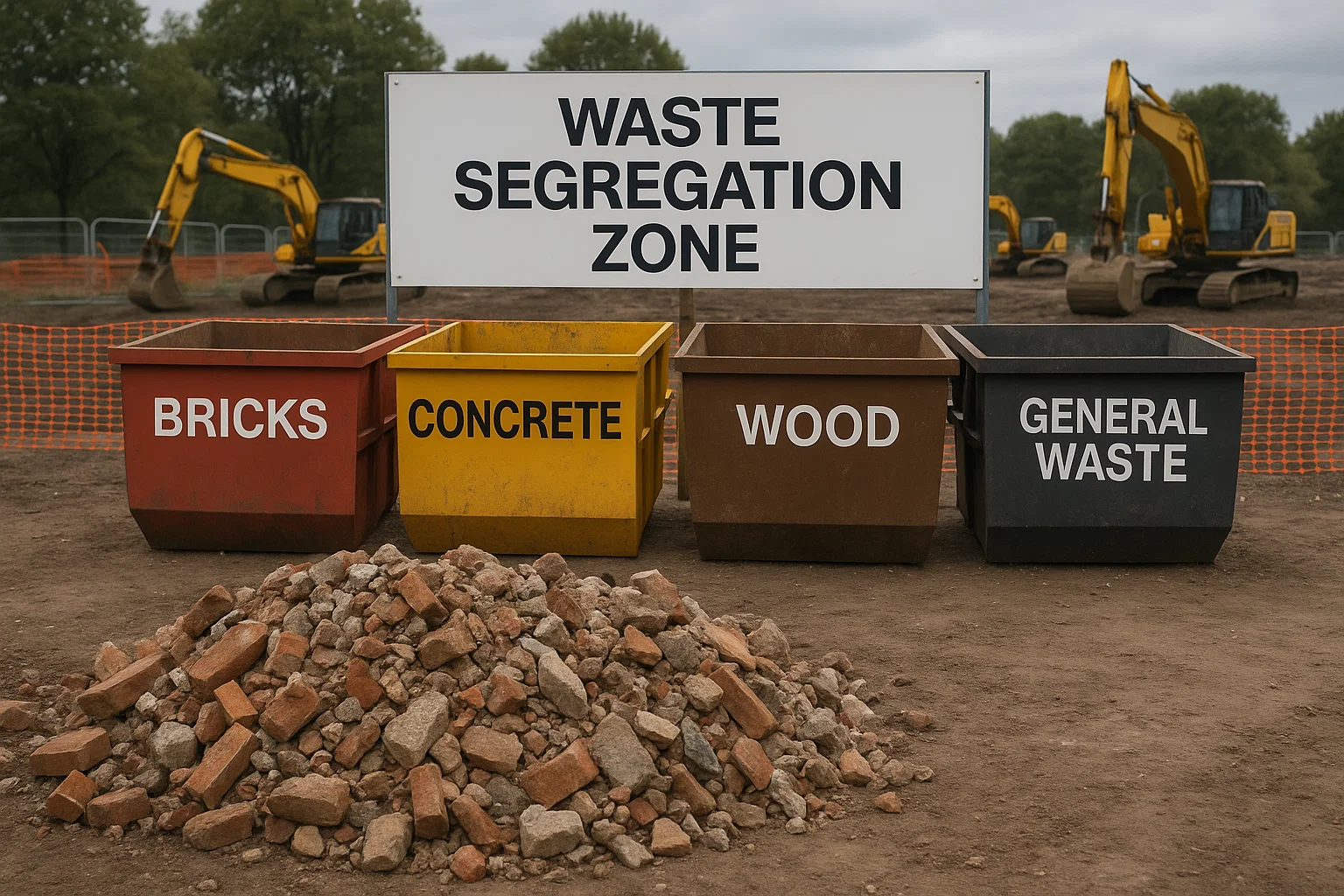
Recovery depends on clean loads. Recycled aggregate and manufactured products need material that is reasonably free of contamination. Keeping concrete, wood, metal and drywall in separate containers makes them easier and cheaper to process, which is why larger projects increasingly run several roll-offs side by side rather than one mixed container.
Size has to match the material. Common roll-off sizes in the US include 10, 20, 30 and 40 cubic yards. Heavy debris such as concrete is usually placed in smaller containers, since a large container filled with rubble can easily exceed road weight limits before it is full. Lighter, bulkier waste such as wood framing, roofing and cleanout debris suits the larger sizes.
| Roll-off size | Approx. volume | Typical use |
|---|---|---|
| 10 yd³ | 7.6 m³ | Concrete, brick, soil, small demolition |
| 20 yd³ | 15.3 m³ | Roofing, flooring, mid-size renovation |
| 30 yd³ | 22.9 m³ | New construction, larger remodels |
| 40 yd³ | 30.6 m³ | Bulky, light debris on large projects |
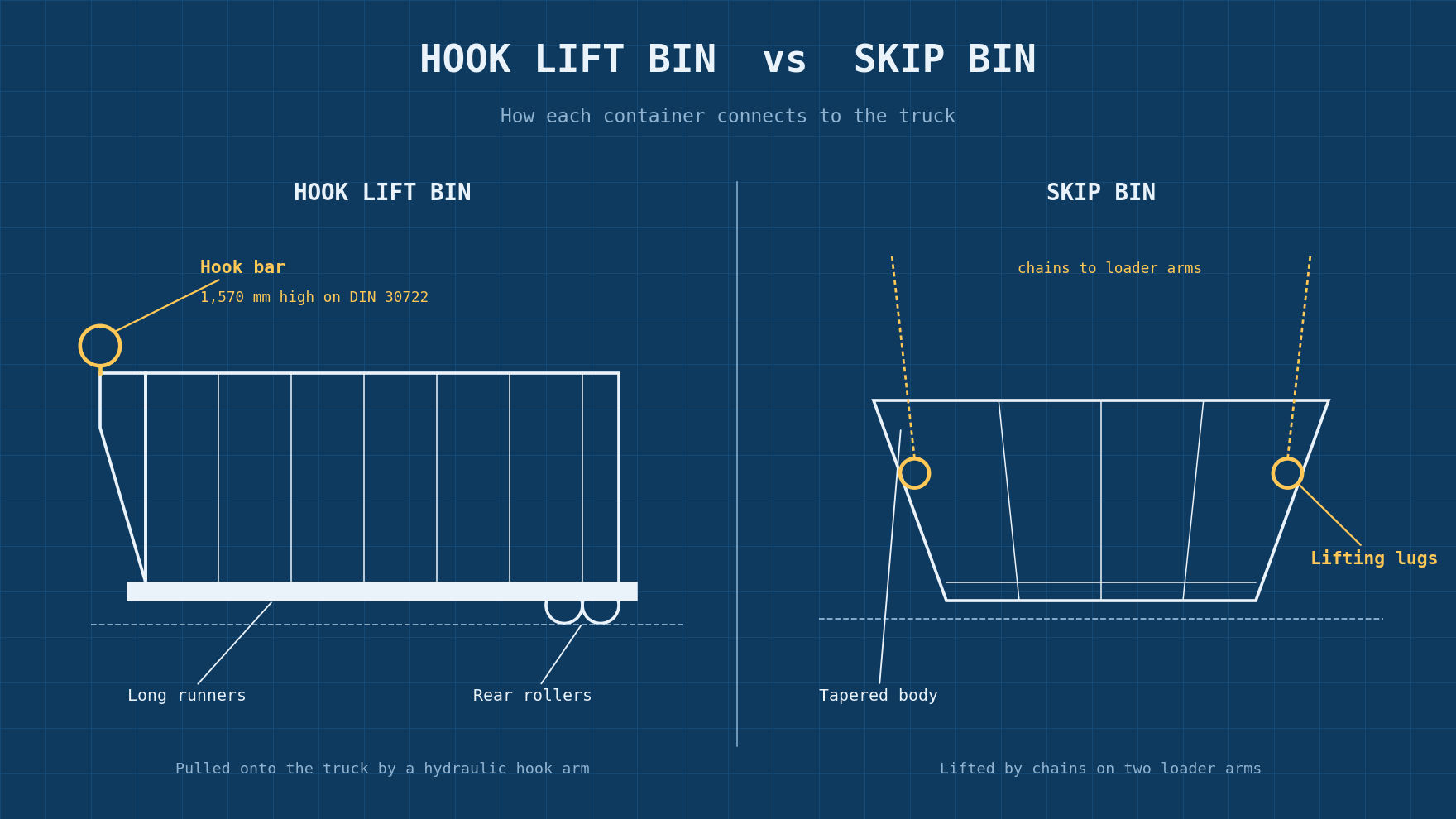
Hook lift systems are growing alongside cable roll-offs. Traditional North American roll-off trucks use a cable hoist, while hook lift trucks use a hydraulic arm to engage a hook bar on the front of the container. Both carry the same type of open-top steel container, but the lifting interface differs, so containers must be built to match the fleet.
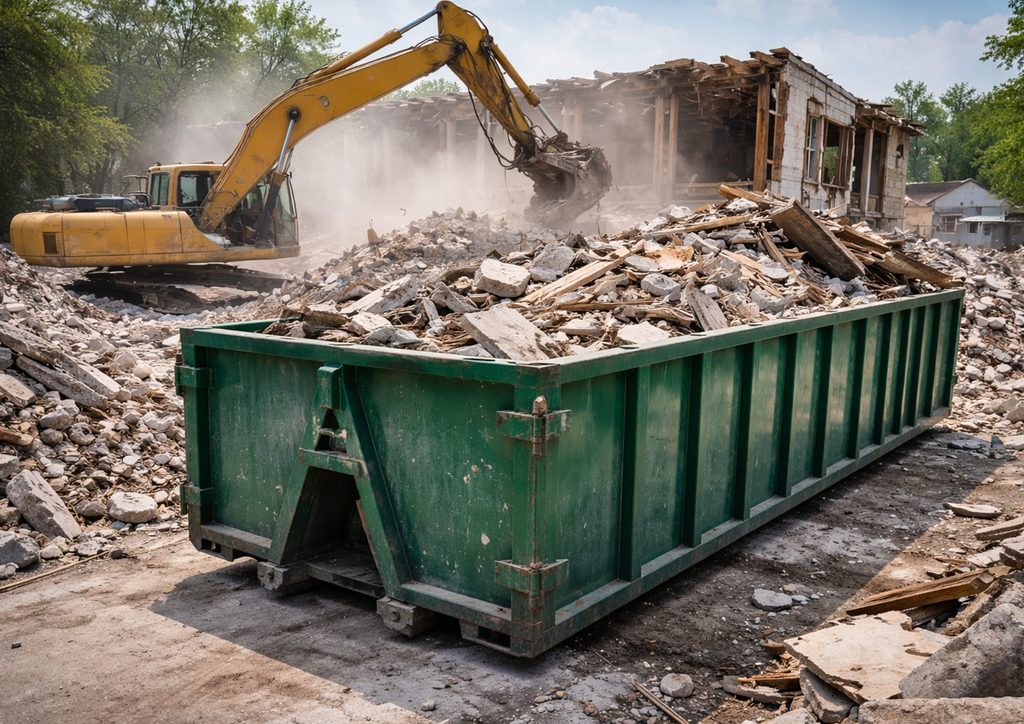
Dense demolition debris places heavy demands on roll-off container construction.
What to Look For When Specifying Containers
For haulers, contractors and recycling operations handling C&D debris, a few specifications matter most:
- Floor plate and cross members: thicker floors and closer-spaced cross members resist denting and fatigue from repeated heavy loads.
- Side wall reinforcement: vertical ribs or posts help walls keep their shape when loaded with rubble.
- Rail and roller design: long rails and durable rollers allow smooth loading and unloading on uneven job sites.
- Lifting interface: cable hook and rail spacing for cable roll-off trucks, or hook bar height for hook lift trucks.
- Coating: a primer and top coat system protects against rust, especially for containers left outdoors for weeks at a time.
Looking Ahead
With hundreds of millions of tons of debris generated every year and most of it already moving to recycling, the US C&D market depends on a steady supply of durable, correctly sized containers. As recovery expands and separation on site becomes more common, operators will need fleets built for heavy loads, frequent swaps and long service life.
Need roll-off containers or hook lift bins built for heavy C&D debris? Contact the Zonnix team to discuss customized container solutions.